
The Basics of Dressing Superabrasive Wheels: Improving Grinding Performance and Wheel Life
Proper dressing is essential for getting the best performance from superabrasive grinding wheels. In this webinar, RIGER explains the fundamentals of dressing diamond and CBN grinding wheels, including profiling, sharpening, dressing wheel selection, and how the right process can improve grinding accuracy, wheel life, and overall productivity.
Understanding how to properly dress a grinding wheel helps manufacturers reduce wear, maintain consistent grinding conditions, and achieve higher-quality results.
What Is Dressing a Superabrasive Grinding Wheel?
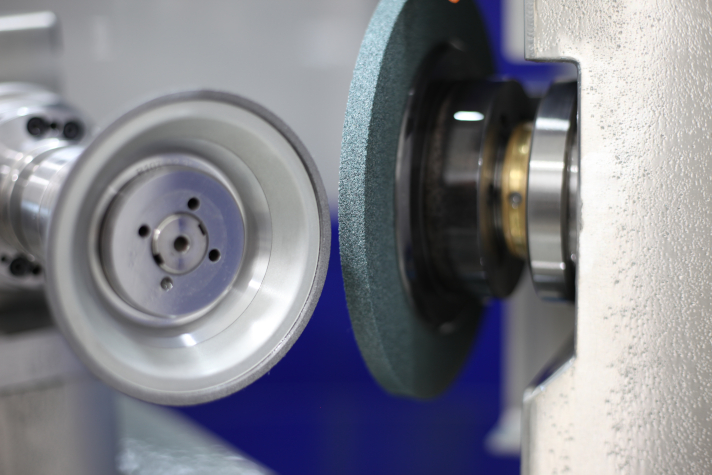
Dressing is the process of preparing a grinding wheel so it can perform efficiently. For superabrasive wheels, dressing restores the wheel’s condition, improves cutting performance, and ensures the wheel maintains the correct geometry for the application.
Profiling vs. Sharpening: Understanding the Dressing Process
Profiling
Profiling focuses on restoring the geometry of the grinding wheel. During this step, the goal is to correct the wheel shape, improve radial and axial runout, and establish the proper form required for accurate grinding.
Profiling is especially important when:
- The wheel loses its original shape
- Wheel accuracy decreases
- Grinding forces increase
- The wheel experiences wear during operation
Sharpening
Sharpening focuses on improving the grinding wheel’s surface condition. Unlike profiling, sharpening does not change the wheel’s overall shape. Instead, it creates the proper micro-topography by exposing abrasive grains and producing sharper cutting edges. A properly sharpened wheel improves cutting ability and helps maintain consistent grinding performance.
Why Is Dressing Important?
Over time, grinding wheels can experience changes caused by normal operation, including wheel wear, surface loading, and increased grinding forces. Without proper dressing, grinding performance can decline, leading to higher spindle loads, reduced efficiency, and shorter wheel life.
Proper dressing helps restore wheel performance by:
- Improving grinding consistency
- Maintaining wheel accuracy
- Reducing excessive wear
- Improving workpiece quality
- Extending grinding wheel life
Factors That Affect Grinding Wheel Dressing
Several factors influence how effectively a superabrasive wheel can be dressed. These include dressing speed, feed rate, depth of cut, dressing direction, cooling method, and the selection of the dressing wheel.
The grinding wheel itself also plays an important role. Diamond and CBN grinding wheels are made with different bond systems, grain sizes, and specifications that affect how easily they can be dressed. Choosing the correct dressing parameters helps maintain stable grinding conditions and improves overall process performance.
Choosing the Right Dressing Wheel
Selecting the correct dressing wheel is critical for achieving consistent results. A general guideline is that finer grinding wheels require finer dressing wheels, while softer bonds typically require softer dressing wheels. Using the wrong dressing wheel can result in increased spindle loads, glazing, chatter marks, excessive wear, and reduced grinding performance.
The dressing wheel should match the grinding wheel’s characteristics, including:
- Grain size
- Bond system
- Wheel hardness
Understanding Grinding Wheel Bond Systems
Superabrasive grinding wheels typically use resin, metal, or hybrid bond systems. Each bond type provides different performance characteristics. Resin bonds provide excellent cutting ability, cooler grinding, and are generally easier to dress. Metal bonds offer high durability, strong thermal performance, and excellent dimensional stability for demanding grinding applications. Hybrid bonds combine benefits from both resin and metal bonds, providing a balance of cutting performance and wheel life. The correct dressing approach depends on the bond system and the specific grinding application.
The Role of Sharpening in Grinding Performance
The webinar also highlights the importance of proper sharpening techniques. Sharpening can be completed manually or through machine processes. Machine sharpening provides more consistent results by maintaining controlled force and repeatability. Manual sharpening depends more heavily on operator technique.
Using a properly prepared sharpening stone helps create the slurry needed during sharpening. This process opens the grinding wheel surface and helps expose sharper abrasive cutting edges.
How Proper Dressing Improves Grinding Results
RIGER shared testing results demonstrating how dressing methods impact grinding performance. Incorrect dressing methods resulted in increased spindle loads, glazing, chatter marks, and reduced wheel life. The key takeaway is that proper dressing is not just maintenance — it is an important part of optimizing the grinding process.
The tests showed that properly dressed and sharpened wheels produced:
- More stable spindle loads
- Improved grinding consistency
- Reduced wheel wear
- Longer wheel performance
Frequently Asked Questions About Superabrasive Wheel Dressing
What is the purpose of dressing a grinding wheel?
Dressing restores the wheel’s shape, removes loading, exposes fresh abrasive edges, and improves grinding performance and consistency.
What is the difference between profiling and sharpening a grinding wheel?
Profiling restores the wheel’s geometry and accuracy, while sharpening improves cutting performance by exposing abrasive grains and opening the wheel surface.
How do you choose the right dressing wheel and parameters?
The dressing wheel and settings should match the grinding wheel’s grain size, bond system, hardness, and application to achieve optimal results.
How does proper grinding wheel dressing improve performance?
Proper dressing helps extend wheel life, reduce wear, maintain consistent quality, lower spindle loads, and improve overall grinding efficiency.